A Laundry Room Maintenance Routine That Keeps It Organized
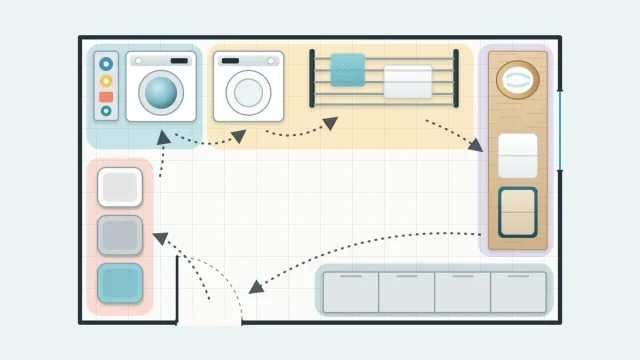
A layered routine that keeps an organized laundry room from sliding back: small habits after every load, a weekly reset, a monthly check and a seasonal review, with appliance care left to the manual.

Organizing a laundry room once is satisfying. Keeping it that way is a different skill, and it has little to do with effort. Rooms slide back into clutter through small, repeated lapses: a bottle left on the washer, a pile of hangers that grows, lint that settles behind a cart.
A laundry room maintenance routine answers those lapses in layers. A few seconds after every load, a short reset each week, a slightly longer check each month and a review with the seasons. None of it is appliance servicing. That belongs to the appliance manual and, where it says so, to a qualified technician.
After every load
These habits take less than a minute and prevent most of the mess.
- Close products and put them back. Caps on, containers closed and returned to their shelf or cabinet right after use. If children or pets use the room, that means up high or behind a latched door.
- Clean the lint filter as the dryer manual directs. Drop the lint in a small lidded bin kept near the dryer.
- Clear the folding surface. Folded laundry leaves the room in its basket. Nothing waits on the counter for later.
- Leave the washer door or lid as the manual advises. Manuals differ on this, so follow the one for your machine.
- Hang up or lay flat anything that is air-drying. Damp items left in a heap are tomorrow’s problem. The guide to laundry drying rack ideas covers where a rack can go.
Once a week
Pick a fixed moment, such as the end of the main laundry day, and run through a short reset.
- Empty the lint bin and the trash.
- Wipe the machine tops, the counter and the shelf fronts with a damp cloth.
- Collect strays and return them to their rooms: single shoes, toys, coins, mail.
- Restock from back-stock. If a product in use is nearly empty, bring its replacement forward and add the item to the shopping list.
- Return baskets and hampers to their slots.
Once a month
The monthly round looks a little deeper, at the places clutter and grime build up unnoticed.
- Check products for leaks and loose caps. Lift each container, look underneath and tighten the cap. Dispose of anything damaged as its label says.
- Wipe the shelves under liquids. Drips make a sticky ring that catches lint. A tray or mat under the bottles makes this quicker.
- Sweep or vacuum lint. Cover the floor and the edges you can reach without moving the machines.
- Check the bin labels. Replace tags that are peeling and rename any bin whose contents have changed.
- Thin out the extras. Surplus hangers go back to the closets. Single socks that have waited a month without a partner can leave.
While you are at the shelves, notice whether the groups still hold. If items have started to wander, a quick regroup is easier now than a full redo later; the method in how to organize laundry room shelves works just as well for a ten-minute touch-up.
With each season
Four times a year, give the room a slower look. This is where organization and basic care meet.
Review what is stored
Go shelf by shelf and ask whether each thing was used since the last review. Things drift in over a season: a half-finished project, a product bought once, a bag of outgrown clothes. If the review turns up more than a handful, follow the steps in how to declutter a laundry room rather than shuffling items between shelves.
Clean behind movable storage
Pull out the rolling cart, hampers and any light freestanding units and clean the floor and wall behind them. Lint collects in sheltered strips. Do not move the washer or dryer yourself for this; clean what you can reach.
Check fixings and restraints
Press gently on wall shelves, rails and hooks to see that their fixings are still firm, and look at the anti-tip restraints on tall units. If anything has loosened, unload it and refit it following the product’s instructions, or ask a professional.
Look at the dryer vent connection
Look at the part of the vent connection you can see without moving anything. Check that nothing is stored against it or pressing on it. Cleaning and servicing of the vent and the appliances are arranged as the appliance manual and a qualified technician advise, on the schedule the manual gives. For general background on dryers and other appliances, see the U.S. Fire Administration’s page on appliance and electrical fire safety.
Check for damp
Look at corners, the wall behind drying racks and the back of low cabinets for signs of moisture. Good ventilation while laundry dries makes a difference. The U.S. Environmental Protection Agency’s guide to mold and moisture in the home gives more detail on what to look for.
The whole routine in one table
| When | Task | Time |
|---|---|---|
| After every load | Products closed and put away; lint filter cleaned as the manual directs; folding surface cleared | Under a minute |
| Weekly | Empty lint and trash bins; wipe tops, counter and shelf fronts; return strays; restock from back-stock | About ten minutes |
| Monthly | Check caps and leaks; wipe under liquids; sweep lint; check bin labels; thin hangers and single socks | About twenty minutes |
| Seasonally | Review what is stored; clean behind movable units; check fixings and restraints; look at the visible vent connection | Half an hour to an hour |
What stays with the manual
It is tempting to fold appliance care into a household checklist with intervals of your own. Resist that. How and when to clean a washer, what to do about the dryer’s vent and when to call for service are set out in each appliance manual, and they differ from model to model.
Good to know
If the dryer takes longer than usual, feels hotter than usual or you notice a burning smell, stop using it and contact the manufacturer or a qualified technician. Do not try to solve it by rearranging the room.
Keep the manuals where you can find them. A labeled folder or a clear sleeve inside a cabinet door works well, and it means the answer to “how often?” is always in the room.
Making the routine stick
Write the four layers on a small card inside a cabinet door, so anyone in the household can run them. If a task keeps being skipped, something is usually awkward: the lint bin is too far away, the cloth is missing or a shelf is too full to wipe. Fix the obstacle and the habit follows.
Frequently asked questions
How often should I tidy the laundry room?
Tidy a little after every load by putting products away and clearing the folding surface. Add a short weekly reset to wipe surfaces, empty the lint bin and return strays. A monthly check and a seasonal review catch whatever builds up more slowly.
How often should the dryer vent be cleaned?
Follow the schedule in your dryer's manual and the advice of a qualified technician; this site does not set service intervals. Clean the lint filter as the manual directs, keep storage away from the vent connection, and arrange service if the dryer starts behaving differently.
What is the most important part of a laundry room routine?
The weekly reset. Emptying the lint and trash bins, wiping the tops and shelf fronts, returning strays and restocking from back-stock takes about ten minutes and stops small lapses from piling up. If a busy month leaves room for only one layer, keep that one.