
22 Ways to Create a High-Performance Energy Saving Office
Why an Energy Efficient Office Matters More Than Ever in 2026
An energy efficient office can cut utility bills by as much as 65% — and with commercial buildings wasting roughly 30% of the energy they consume on average, the opportunity to save is enormous.
Here are the most impactful ways to make your office more energy efficient:
- Conduct an energy audit to find where energy is being wasted
- Upgrade to LED lighting and add occupancy sensors
- Optimize your HVAC system with smart thermostats and zone control
- Seal gaps and improve insulation around windows, doors, and ducts
- Switch to ENERGY STAR-certified equipment and enable power management
- Eliminate vampire power by unplugging idle devices or using smart power strips
- Use building automation systems to adjust energy use based on real occupancy
- Engage employees with clear policies, training, and energy-saving habits
- Explore renewable energy options like solar to offset consumption
- Benchmark your building using tools like ENERGY STAR Portfolio Manager
For most businesses, energy costs are a significant and largely controllable expense. Yet the majority of offices still run lights in empty rooms, heat unused spaces, and leave equipment on standby around the clock.
The good news? You don’t need a massive renovation budget to make a real dent. Many of the highest-impact changes cost very little — or nothing at all.
In April 2026, with energy prices continuing to pressure operational budgets, the case for energy efficiency has never been stronger. Whether you own your building or rent it, there are 22 practical strategies you can start applying right now.
This guide walks through all of them — from quick wins to longer-term upgrades — so you can build a workplace that runs leaner, costs less, and supports the kind of focused, productive environment your team actually needs.
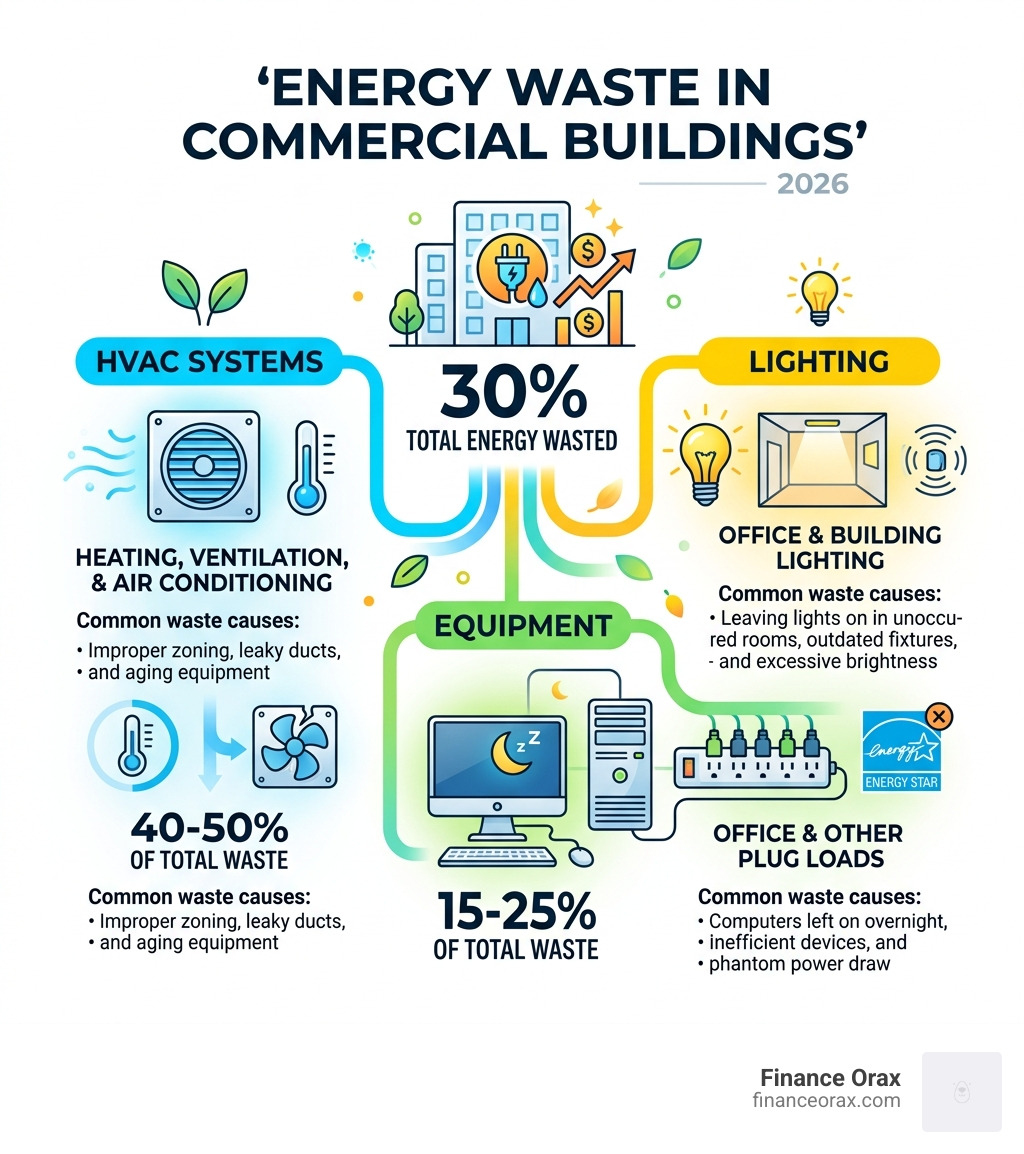
The Core Pillars of an Energy Efficient Office
To transform a standard workspace into a high-performance energy efficient office, we have to look past the monthly bill and understand the “why” and “where” of our consumption. It starts with data. You wouldn’t try to fix a car without looking under the hood; similarly, you shouldn’t guess where your energy is going.
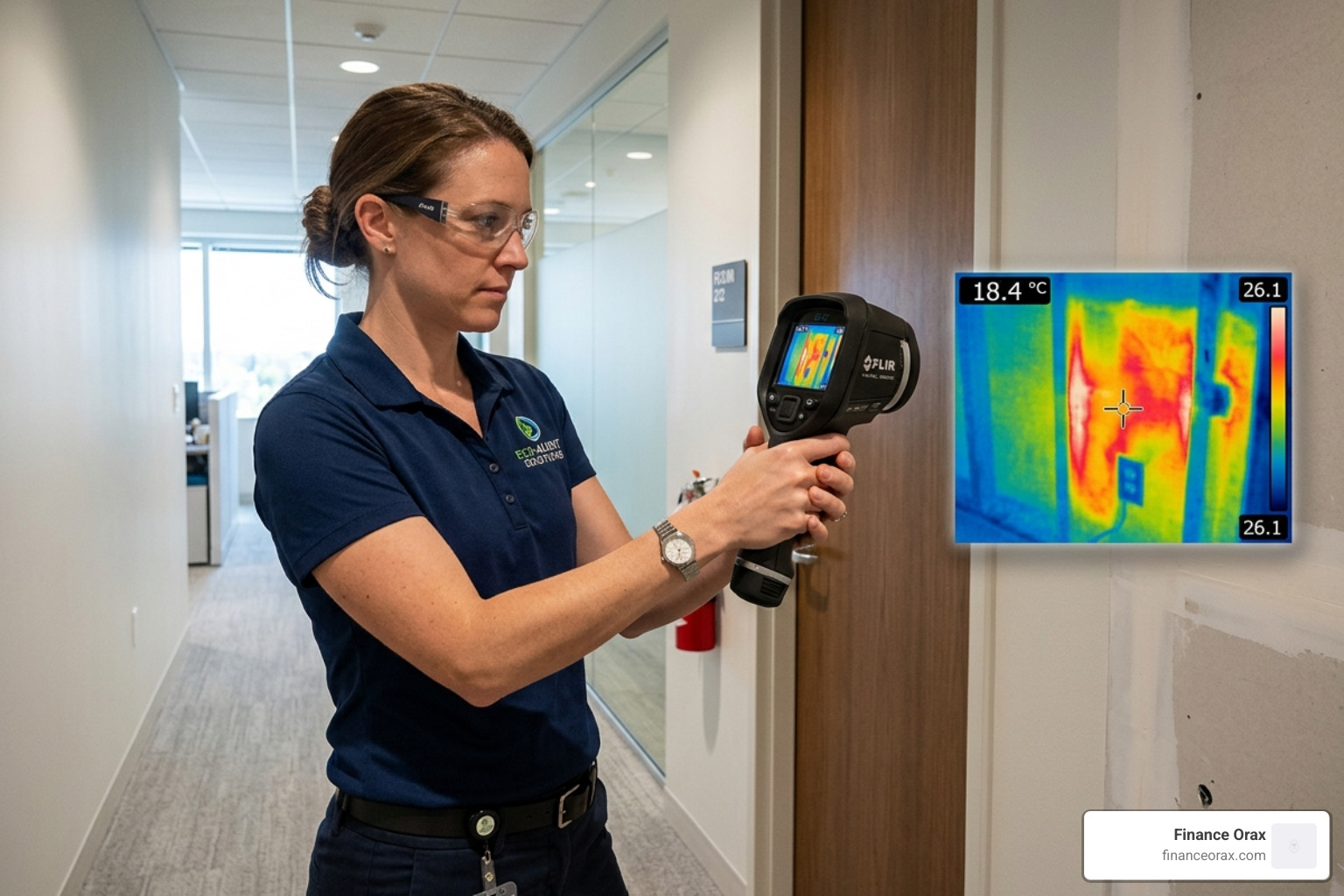
The first step is a professional energy audit. An auditor uses tools like thermal imaging to find “hot spots” or air leaks that are invisible to the naked eye. If a professional audit isn’t in the budget yet, small businesses can use a DIY Office Energy Checklist provided by the Department of Energy to identify low-hanging fruit.
Once you have your baseline, benchmarking becomes your best friend. Tools like the ENERGY STAR Portfolio Manager allow us to compare our building’s performance against similar offices nationwide. It’s a reality check: are you an energy superstar, or is your building the equivalent of a 1970s gas-guzzler? Knowing your Energy Use Intensity (EUI)—which can range from under 100 to over 1,000 kBtu per square foot—helps us calculate the potential ROI for every upgrade we consider.
Designing an Energy Efficient Office Layout
At Finance Orax, we believe that a high-performance routine starts with a well-designed environment. An energy efficient office layout prioritizes natural light. This isn’t just about aesthetics; it’s about “daylight harvesting.” By placing workstations near windows and using low-partition furniture, we can reduce the need for overhead artificial lighting for much of the day.
Furthermore, we should consider “thermal zones.” Grouping high-density areas together allows for more focused climate control. Open-plan offices are generally more efficient to heat and cool than a maze of small, individual rooms, provided the building envelope is tight. For those looking to go even further, the concept of Zero Energy Offices offers a blueprint for buildings that produce as much energy as they consume through passive design and onsite renewables.
Strategic Building Envelope Upgrades
The “envelope” is the shell of your building. If it’s leaky, your expensive HVAC system is essentially trying to heat the entire neighborhood.
- Window Sealing: Applying high-quality weatherstripping and caulk to windows can prevent significant drafts.
- Gap Insulation: Focus on areas where pipes or wires enter the building.
- Double Glazing: If you’re in a position to upgrade, double or triple-pane windows with low-emissivity (low-E) coatings reflect heat back into the room in winter and block it in summer.
- Air Curtains: For offices with high foot traffic, air curtains at the entrance create an invisible barrier of air that keeps conditioned air in and outside air out.
Optimizing HVAC and Building Insulation
Heating, Ventilation, and Air Conditioning (HVAC) systems are the heavy hitters of energy consumption, often accounting for 35% to 40% of total office energy use. In an energy efficient office, we don’t just “set it and forget it.”

Regular maintenance is the easiest way to save. A dirty filter makes the motor work harder, consuming more power for less airflow. We recommend changing filters every three months—or monthly during peak summer and winter seasons.
Smart thermostats are a game-changer for ROI. They allow us to set “temperature dead bands”—a range where neither heating nor cooling is active (for example, between 21°C and 23°C). This prevents the systems from “fighting” each other.
| Adjustment | Potential Savings |
|---|---|
| Lowering thermostat by 1° in winter | 8% reduction in heating bills |
| Raising thermostat by 1° in summer | Up to 10% reduction in cooling costs |
| Sealing leaky ductwork | 20% improvement in system efficiency |
Duct sealing is another “invisible” fix. Up to 20% of the air moving through a typical duct system is lost to leaks. By sealing these and ensuring boilers and chillers are tuned yearly, we ensure every cent spent on climate control actually reaches the employees.
Lighting, Automation, and Smart Technology
Lighting is often the second-largest energy drain, but it is also the easiest to optimize. Modern energy efficient office designs have moved away from the buzzing, flickering fluorescent tubes of the past.
The Power of LEDs and Sensors
Upgrading to LEDs is a no-brainer. LEDs use 75% less energy than incandescent bulbs and last 25 times longer. But the real magic happens when you add automation:
- Occupancy Sensors: These ensure lights are only on when someone is in the room. This can save between 10% and 50% on lighting costs.
- Daylight Harvesting: Photocells detect the amount of natural light coming in and dim the LEDs accordingly.
- Bi-level Switching: This allows users to turn on only half the lights in a room when full brightness isn’t needed.
Smart Tech for an Energy Efficient Office
Beyond bulbs, Building Automation Systems (BAS) act as the “brain” of the office. These systems use IoT sensors to monitor everything from CO2 levels to room temperature in real-time. If a conference room is empty, the BAS can automatically power down the lights and reduce the AC without a human ever touching a switch. This data-driven optimization ensures comfort is maintained while waste is eliminated.
Integrating Visitor Management Systems
A unique insight in 2026 is the role of visitor management and occupancy tracking software. By knowing exactly how many people are in the building (and in which zones), the building’s smart systems can adjust resources dynamically. If the third floor only has three people on a Friday afternoon, the system can consolidate them to a smaller zone and power down the rest of the floor.
Equipment Management and Employee Engagement
Even with the best HVAC and lighting, “plug loads”—the energy used by everything plugged into the wall—can quietly sabotage your efficiency goals.
Managing Your Tech
The move from desktops to laptops is one of the simplest shifts a company can make. Laptops use up to 85% less electricity than traditional desktops. However, even the most efficient laptop can become a “vampire” if left plugged in while the office is closed.
- Vampire Power: This is the energy consumed by devices in standby mode. It can account for 7% to 11% of a building’s total use.
- Smart Power Strips: These automatically cut power to peripherals (like monitors and printers) when the main device is turned off.
- ENERGY STAR Equipment: Always look for the blue label. ENERGY STAR-certified computers and printers use significantly less power in “sleep” mode.
Fostering a Culture in the Energy Efficient Office
At Finance Orax, we know that the best tools in the world won’t work if people don’t use them. Creating an energy efficient office is as much about human behavior as it is about hardware.
We recommend forming an “Energy Committee” made up of employees from different departments. Give them the autonomy to run “Green Challenges”—perhaps a competition to see which department can reduce their paper waste the most (did you know the average worker creates two pounds of paper waste daily?).
Hybrid work scheduling is another cultural tool. By coordinating “office days,” you can keep entire sections of the building powered down on low-occupancy days. It’s about building a sustainable routine that feels like a shared mission rather than a corporate mandate.
Frequently Asked Questions about Office Efficiency
What are the biggest energy consumers in an office?
Typically, HVAC systems are the largest consumers (about 35-40%), followed closely by lighting (20%) and office equipment like computers and servers (15-20%). “Vampire power” from devices left on standby is a growing concern in modern, tech-heavy offices.
How much can a business save through energy efficiency?
While results vary, many businesses see a 20% to 30% reduction in utility bills almost immediately after implementing low-cost measures. Comprehensive retrofits, like those seen in the Empire State Building, have achieved 38% reductions, saving millions annually. Some estimates suggest a fully optimized energy efficient office can save up to 65% on total utility costs.
What are the best low-cost energy-saving measures?
The “big three” for low-cost savings are:
- Adjusting the thermostat: Even a 1-degree change can save 8% on heating/cooling.
- Unplugging devices: Using power strips to kill standby power.
- Maintenance: Cleaning filters and vents to ensure systems aren’t working harder than they need to.
Conclusion
Building an energy efficient office is a journey, not a one-time task. In April 2026, the intersection of sustainability and profitability has never been clearer. By focusing on the core pillars of smart design, optimized climate control, and employee engagement, you aren’t just saving money—you’re creating a high-performance environment where people actually want to work.
From the simple act of switching to LEDs to the advanced integration of building automation, every step counts toward reducing your carbon footprint and boosting your bottom line. At Finance Orax, we believe that your office setup is the foundation of your daily routine. A space that is bright, comfortable, and efficient naturally leads to a more focused and productive team.
Start building your high-performance office routine today and see how a few strategic changes can transform your workspace into a model of 21st-century efficiency.
