Laundry Folding Station: How to Create One in Any Room
Seven steps to a folding station near the machines: find a surface, check its height, keep the appliances clear, then add a basket spot, hanging space and a pile for each person.
At a glance
What you need
- A flat, wipeable surface at a comfortable height
- A stool or low shelf for the basket
- A short rod or a few sturdy hooks
- Spare hangers
- One small basket per household member
- Clip-on bin tags
Folding on the bed works until someone needs the bed. Folding on the sofa works until the piles slide into each other. In both cases clean laundry has traveled away from the machines and settled somewhere it does not belong, which is why it so often stays in the basket for days.
A laundry folding station fixes that with very little: a clear surface at a comfortable height, a place for the basket, somewhere to hang shirts, and a container for each person’s finished pile. It does not need its own room. The seven steps below work in a full laundry room, a hallway closet setup or a corner of a utility room.
Step 1: Find the surface
Almost any flat, stable, wipeable surface near the dryer can do the job. Look at what the room already has before buying anything.
- A counter over front-loaders. The largest surface, right where the laundry comes out. One carried by the walls or its own legs is simplest, because it does not rest on the machines.
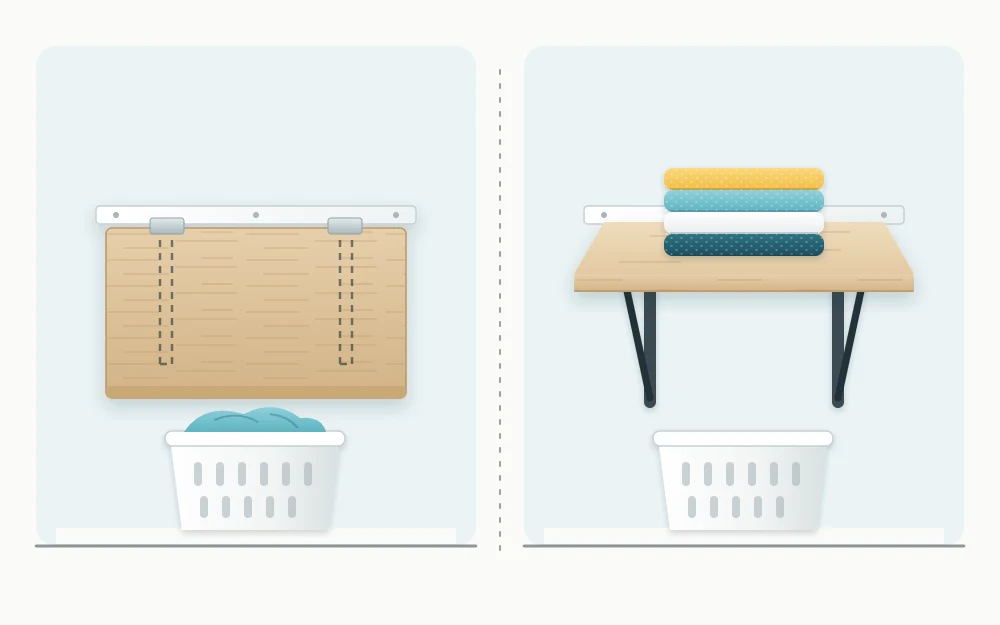
- A wall-mounted fold-down table. Opens when needed and folds flat afterward; good for narrow rooms and walkways.
- A freestanding table or cart. Needs no fixing and can move. A cart with locking wheels stays put while you work.
- The top of a low cabinet. Storage below, folding above.
- A board across a utility sink. A fitted cover turns the sink into a surface between uses. It has to sit securely on the rim and be dry before laundry touches it.
Size matters less than you might expect. A surface wide enough for a folded bath towel with a stack beside it, roughly 30 in (75 cm) across, is enough for most loads.
Step 2: Check the height
A folding surface is comfortable when you can stand upright with your forearms slightly lowered and your shoulders relaxed. For most people that puts it somewhere between hip and waist level, close to the height of a kitchen counter.
Try it before committing. Fold a towel on the kitchen counter, then on a dining table, and notice which one your back prefers. If several people of different heights fold, set the surface for whoever does it most, or choose a table with adjustable legs.
Step 3: Make sure it blocks nothing
With the surface in place, or the fold-down table open, check the machines. Both appliance doors should open fully, the controls should be easy to see and reach, and the lint filter should come out without moving anything. Nothing should cover or press on the dryer vent connection, the hoses, the water shut-off valves or the power connection.
Before resting a board, a basket or a pile of laundry directly on top of a washer or dryer, read the appliance manual. Some manufacturers advise against using the top as a work surface, and a spinning machine can shake a stack onto the floor.
Good to know
A wall-mounted table carries your leaning arms as well as the laundry. Use one with a stated load rating, follow the maker’s fixing instructions for your wall type, and check for pipes and cables before drilling. If you are unsure, ask a professional.
Step 4: Add a landing spot for the basket
The basket of clean laundry needs to sit beside the surface, not on it. If it takes up half the table, you are folding in what is left.
A landing spot can be a stool, a low shelf, the end of a bench, or a hook-on basket holder at the side of the table. Place it on the side nearest the dryer so the laundry moves in one direction: dryer, basket, surface, finished pile. Ideally the basket sits a little below the surface, so you lift items up and out without bending to the floor each time.
Step 5: Put hanging space within arm’s reach
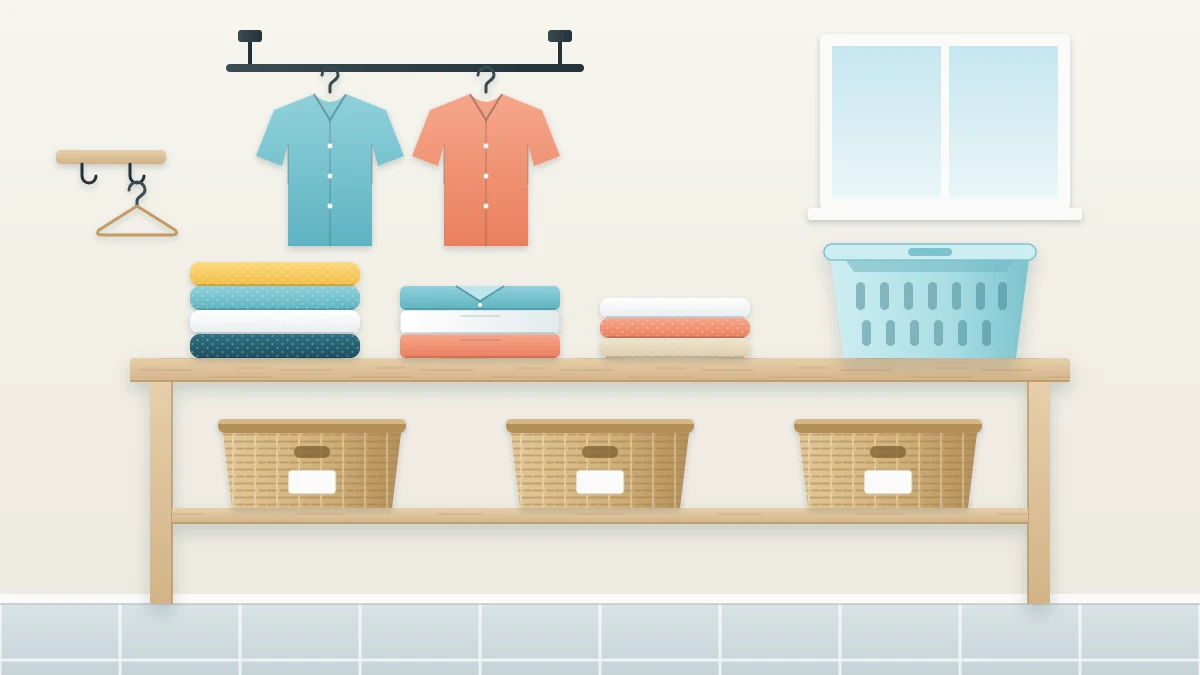
Some clothes should never be folded warm into a pile. A short rod, a wall-mounted valet hook or three sturdy hooks next to the surface lets shirts and trousers go straight onto hangers as they come out of the basket.
Keep a handful of empty hangers there permanently. A rod with no hangers on it gets ignored. Items that are still slightly damp belong on a rack and not on this rod, so the station stays clear; see the options in laundry drying rack ideas.
Step 6: Give each person a basket or a section
Folded laundry needs a destination, or the stacks simply stay on the table. Give each household member one container: a small basket on a shelf under the surface, a cube in a shelving unit, or a tagged section of a long shelf.
As you fold, each item goes directly into its owner’s basket. When the load is done, the surface is already empty and each person collects their own. Add one more basket for household linens such as towels and sheets.
This mirrors the way dirty laundry arrives. If you already use a laundry sorting system with one container per load, the folding station is the same idea at the clean end.
Step 7: Keep the surface empty between loads
A folding surface is only useful when it is clear. The moment it becomes a shelf for bottles, mail or a basket of odd socks, folding moves back to the bed.
Make one firm rule: nothing is stored on the folding surface. Laundry products go back to their shelf or cabinet after each use, in their original containers, and accessories go to their bin. A fold-down table enforces the rule by itself, because it cannot be closed with anything on it.
Versions for a small room
When there is no space for a permanent surface, a folding station can still exist for ten minutes at a time.
- A fold-down shelf on the wall opposite or beside the machines, opened only while you fold.
- A folding board stored upright beside a machine, if the appliance manual’s spaces allow, and laid across a stable surface when needed.
- Another room. Carry the load in a basket to a table or bed, fold it there, and bring the basket straight back. The per-person baskets can live in that room.
The article on small laundry room organization shows how these fit with the rest of a tight layout.
Frequently asked questions
What is the best height for a laundry folding surface?
Somewhere between hip and waist level suits most people who fold standing up, which is close to kitchen counter height. Bodies differ, so test it first: fold a towel on a few surfaces at home and choose the height that lets you stand upright with relaxed shoulders.
Can I fold laundry on top of the washer or dryer?
Check the appliance manual before you do. Some manufacturers advise against using the top of a machine as a work surface, and vibration can shake stacks off. A counter carried by the walls or its own legs, or a separate table, gives you the same spot without resting on the machines.
How do I make a folding station in a very small laundry room?
Use a surface that disappears. A wall-mounted fold-down table or a folding board stored upright opens only while you fold. If even that does not fit, carry the load in a basket to a table in another room and keep the per-person baskets there.