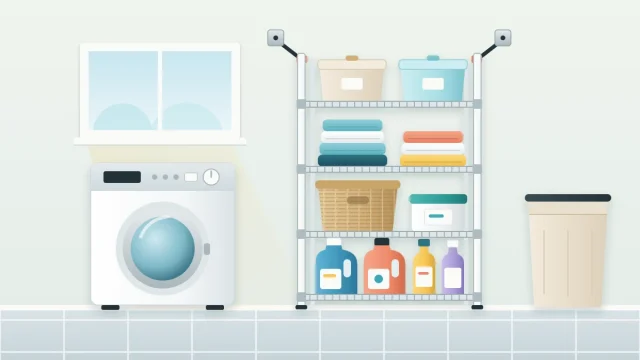
Open Shelves vs. Cabinets in a Laundry Room
A fair comparison of open shelving and closed cabinets for a laundry room: visibility, access, dust, child safety and space, plus how to split one wall between the two.
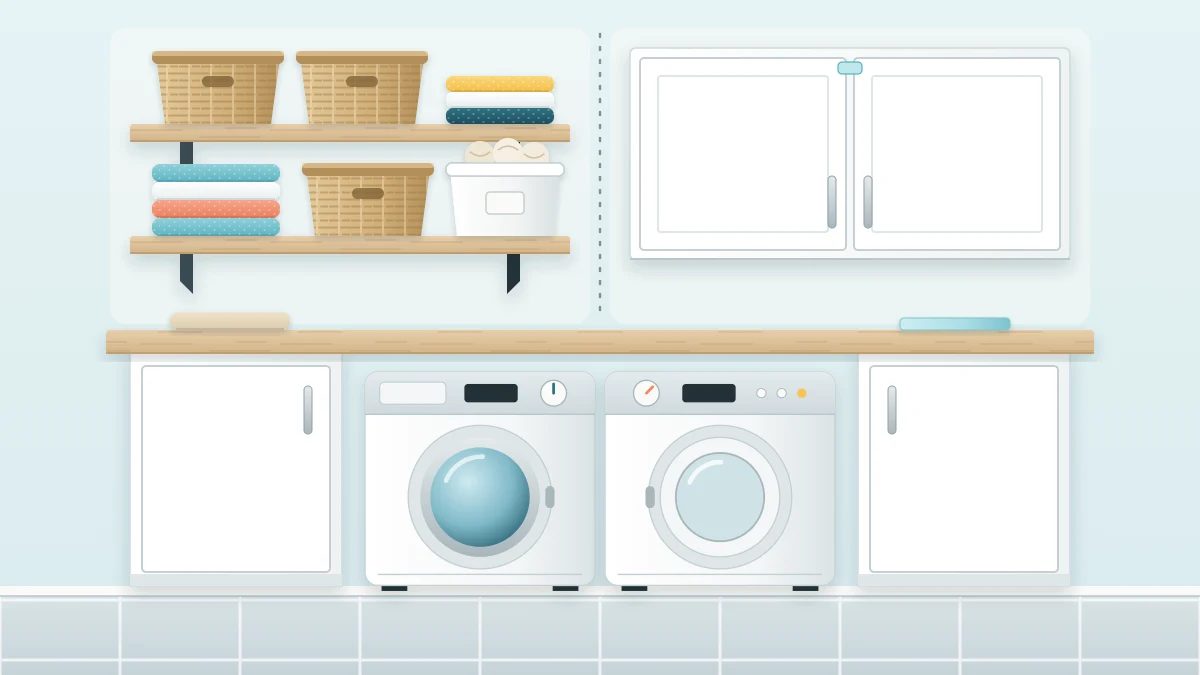
Most laundry rooms have one good wall for storage, and the first decision is whether to leave it open or put doors on it. Both choices hold the same bottles and baskets. They differ in what you see, how fast you can reach things, how much dust settles, and who else can get at the contents.
The question of open shelves vs cabinets rarely has an all-or-nothing answer. This comparison sets out what each does well and badly in a laundry room specifically, then shows how to divide the wall between them.
What open shelves do well, and where they fall short
Open shelves are the simpler structure: boards and brackets, or a freestanding unit. In general terms they cost less than cabinets of the same width, and they go up faster.
Their strengths are speed and visibility. Everything is in view, so you see at a glance what you have and what is running low, and you take things down with one hand while the other holds a basket. Because there is no solid front, a small room keeps its full visual depth and feels less boxed in.
The same openness is the weakness:
- Clutter shows. A shelf looks as tidy as the last person left it.
- Dust and lint settle. A room with a dryer produces lint, and it lands on every exposed surface, bottle and folded towel.
- Products stay in view and within reach. Bright packaging at a child’s eye level is an invitation, and an open shelf offers no barrier at all.
What cabinets do well, and where they fall short
Cabinets put a door between the room and its contents. That hides visual clutter, so the room looks calm even when the inside is merely adequate. Doors also keep dust and lint off what is stored, which matters most for clean linens and for anything used rarely.
The feature open shelves cannot match is that a cabinet door can be latched or locked. That makes a closed cabinet, mounted high, the stronger choice for laundry products in a home with children or pets.
The drawbacks are practical ones:
- Cost. In general terms cabinets cost more than shelves and take more effort to hang.
- Door swing. An open door needs space in front of it and must not collide with an appliance door, a raised top-loader lid or your head.
- Forgotten items. What is out of sight gets bought twice. Deep cabinets in particular collect things at the back.
For layouts, sizes and interior fittings, see the guide to laundry room cabinets.
Side-by-side comparison
| Factor | Open shelves | Cabinets |
|---|---|---|
| Visibility | Everything in view; easy to see what is low | Hidden; a calm look, but items can be forgotten |
| Access | One-handed, immediate | A door to open first |
| Dust and lint | Settle on contents; needs regular wiping | Kept off the contents |
| Safety with children | No barrier; height is the only protection | Can be latched or locked, which helps |
| Space needed | Shelf depth only | Cabinet depth plus room for the door to swing |
The practical answer: a mix
For most rooms the best arrangement uses both, divided by what is being stored and not by looks.
Closed and latched for laundry products and anything hazardous: detergent, detergent packets in their original closed container, bleach, stain removers and other cleaning products. They go up high, in their original labeled containers, behind a door, and they return there right after each use.
Open for baskets, towels, cleaning cloths and non-hazardous accessories such as dryer balls, mesh bags and clothespins. These are the things you grab most often and that nobody needs protecting from.
A common layout puts a wall cabinet above or beside the machines for products, and one or two open shelves next to it for the rest.
Good to know
A latch helps keep products out of a child’s hands, but it cannot be relied on alone. Store products high, out of sight, and follow each product label for storage.
How to decide for your room
Four questions settle the balance between open and closed.
Who uses the room?
If one adult does all the laundry, open shelves are easy to keep in order. The more people who use the room, the more a closed front helps, because it hides the differences in how carefully each person puts things back.
Can children or pets get in?
If they can, now or in the next few years, plan closed, latched storage for every product. Visiting grandchildren count. This question outweighs the other three.
How tidy do you keep things?
Be honest. Open shelves reward people who put things back and punish everyone else. If your current shelves are a pile, more open shelving will be a longer pile, and doors are the kinder choice.
How much lint does the room produce?
In a busy room where the dryer runs daily, exposed shelves need wiping often, and clean linens stored in the open pick up lint.
Getting a closed effect on open shelves
If cabinets are not possible, in a rental for instance, you can get part of the benefit without doors.
- Lidded baskets. They hide contents and keep lint out. The options are compared in the article on laundry supply baskets.
- Matching open bins. A row of identical bins with tags reads as one block even though the tops are open.
- A curtain. A tension rod and a washable fabric panel across a shelving unit or alcove hides everything at once. Keep it well away from the machines and from anything warm.
These are visual fixes only. A curtain or a basket lid is not a child barrier, so laundry products on an open unit still need to be on the highest shelf an adult can reach, or in a latched cabinet elsewhere.
Tip
If you choose open shelves, set them up to stay orderly from the start. The steps in how to organize laundry room shelves take about an afternoon.
Fixing either one to the wall
Shelves and cabinets share the same rules once they are loaded. Liquids are heavy, so choose products with a stated load rating and follow the maker’s fixing instructions for your wall type. Check for pipes and cables before drilling, because laundry room walls often contain both, and ask a professional when unsure.
A tall freestanding unit, open or closed, should be secured against tipping with the restraint supplied or an anti-tip kit, following its instructions. Whichever you choose, keep it clear of the appliance doors, the controls and the connections behind the machines, as the appliance manual describes.
Frequently asked questions
Are open shelves or cabinets better for a small laundry room?
Open shelves keep a small room feeling open and need no space for doors to swing, so they often suit the tightest rooms. A single high cabinet for laundry products is still worth fitting if children or pets can enter, with open shelves beside it for baskets and towels.
Is it okay to keep detergent on an open shelf?
In a home without children or pets, a high open shelf can work if the product stays in its original labeled container and is stored as the label says. Where children or pets can get in, a closed, latched cabinet up high is the better place, with products returned right after use.
How can I hide clutter on open laundry shelves?
Use lidded baskets, a row of identical tagged bins, or a washable curtain on a tension rod across the unit. These improve the look and keep some lint off. They are not a barrier for children, so products still belong up high or behind a latched door.