
Smell Your Way to Dreamland with These Sleep Blends
Why an Aromatherapy Bedtime Wind Down Could Be the Sleep Fix You’ve Been Missing
Aromatherapy bedtime wind down routines use calming essential oils — like lavender, chamomile, and bergamot — to signal your brain that it’s time to sleep. Here’s a quick overview of how to get started tonight:
- Best oils to use: Lavender, Roman chamomile, bergamot, cedarwood, ylang-ylang
- Best methods: Diffuser, pillow mist, topical roll-on, linen spray
- When to start: 30–60 minutes before bed
- How long: 20–30 minute sessions are ideal
- Key rule: Always dilute oils before applying to skin
You’ve probably had nights where your body is exhausted but your mind refuses to stop. Work emails, tomorrow’s to-do list, that conversation you’re still replaying — it all keeps spinning.
That’s exactly where scent can help.
When you inhale essential oil molecules, they travel directly to the limbic system — the part of your brain that controls emotions, stress, and sleep. According to Dr. Shelby Harris, a licensed clinical psychologist and director of sleep health at Sleepopolis, aromatherapy can genuinely help people fall asleep faster.
The trick isn’t finding a magic oil. It’s consistency. Using the same calming scent each evening trains your brain to recognize it as a sleep cue — almost like a sensory off switch for a busy mind.
In April 2026, interest in natural sleep rituals is at an all-time high. And the good news? Building an effective aromatherapy wind-down routine doesn’t require much time, money, or effort.
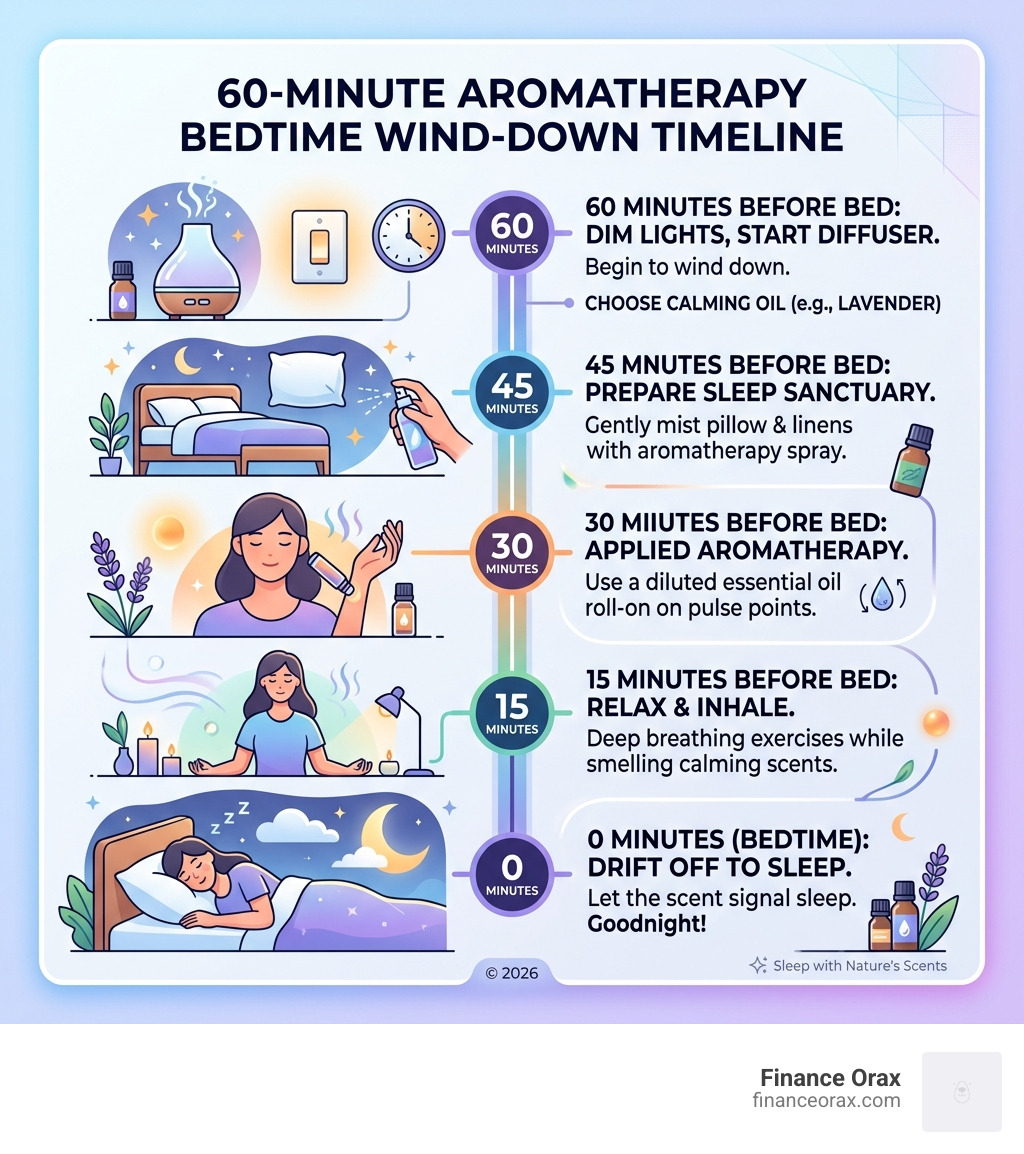
The Science of an Aromatherapy Bedtime Wind Down
To understand why a specific scent can make your eyelids heavy, we have to look at how our bodies process smell. Unlike your other senses, the sense of smell has a “VIP pass” directly to the limbic system. This is the oldest part of the human brain, responsible for our emotions, memories, and—most importantly for us—our survival instincts and sleep-wake cycles.
When you begin your aromatherapy bedtime wind down, olfactory receptors in your nose pick up volatile organic compounds from the essential oils. These receptors send immediate signals to the hypothalamus. This triggers a physiological shift: your heart rate slows, your blood pressure gently dips, and your levels of cortisol (the stress hormone) begin to drop.
Research into lavender, one of the most studied oils for sleep, suggests that its primary components—linalool and linalyl acetate—actually support GABAergic calming. This means they interact with GABA, a neurotransmitter that helps quiet down the nervous system. As noted in this World Sleep Day: A Guide to Better Quality Sleep | Aromatherapy Associates, the body responds exceptionally well to rhythm and repetition. By pairing a specific aroma with deep, restorative breathing, you are essentially telling your nervous system that the “threats” of the day are over and it is safe to rest.
This isn’t just “smelling something nice.” It is a complementary therapy that works on a two-pronged approach: it addresses the physical tension in your muscles while simultaneously soothing the mental chatter that keeps you awake.
Top Essential Oils to Transform Your Sleep Quality

Choosing the right oil is like choosing the right pajamas—it’s personal. While lavender is the “superstar” of the sleep world, it isn’t the only player on the field. In fact, some people find lavender too floral and prefer the grounding, earthy scents of woods or the subtle sweetness of citrus.
Here are the heavy hitters for your nightly routine:
- Lavender: The gold standard. Research shows it reduces stress and anxiety, making it easier to fall into a deep sleep.
- Ylang-Ylang: Sourced from a tropical South Pacific tree, this oil is excellent for dissolving tension and lowering blood pressure.
- Roman Chamomile: Think of this as a warm cup of tea for your nose. It has a gentle, apple-like aroma that mimics the body’s natural pre-sleep state.
- Bergamot: Unique among citrus oils, bergamot is calming rather than stimulating. It helps reduce heart rate and prepares the mind for rest.
- Sandalwood and Cedarwood: These “woody” oils are incredibly grounding. They are perfect for those who feel “flighty” or over-stimulated at the end of the day.
- Clary Sage: Known for its hormone-balancing properties, it can be particularly helpful for those whose sleep is disrupted by hormonal shifts.
- Valerian: While it has a very strong, pungent scent, its sedative strength is legendary in the herbal community.
Scent Profile and Benefit Comparison
| Essential Oil | Scent Profile | Primary Benefit | Sedative Strength |
|---|---|---|---|
| Lavender | Floral, Herbaceous | Reduces anxiety & stress | High |
| Roman Chamomile | Sweet, Apple-like | Lowers heart rate | Medium-High |
| Bergamot | Citrus, Spicy | Calms nervous system | Medium |
| Ylang-Ylang | Sweet, Floral | Lowers blood pressure | High |
| Cedarwood | Woody, Balsamic | Grounding & soothing | Medium |
| Sandalwood | Rich, Earthy | Deep relaxation | High |
Custom Recipes for Your Aromatherapy Bedtime Wind Down
Creating a “synergy blend” is often more effective than using a single oil because different oils target different aspects of relaxation. When blending, we think in terms of “notes”: top notes (the first scent you smell), middle notes (the heart of the blend), and base notes (the scent that lingers).
Sweet Dreams Floral Blend
- 3 drops Lavender (Middle)
- 2 drops Ylang-Ylang (Base)
- 1 drop Bergamot (Top) Why it works: It balances the floral sweetness with a hit of citrus to ease emotional tension.
Deeply Grounded Wood Blend
- 3 drops Cedarwood (Base)
- 2 drops Frankincense (Middle)
- 1 drop Roman Chamomile (Top) Why it works: This mimics the scent of a quiet forest after rain, perfect for stopping a racing mind.
Quiet Mind Citrus Blend
- 3 drops Bergamot (Top)
- 2 drops Sandalwood (Base)
- 1 drop Clary Sage (Middle) Why it works: It provides an uplifting yet calming atmosphere that “cleanses” the mental palate.
Effective Methods for Application and Use
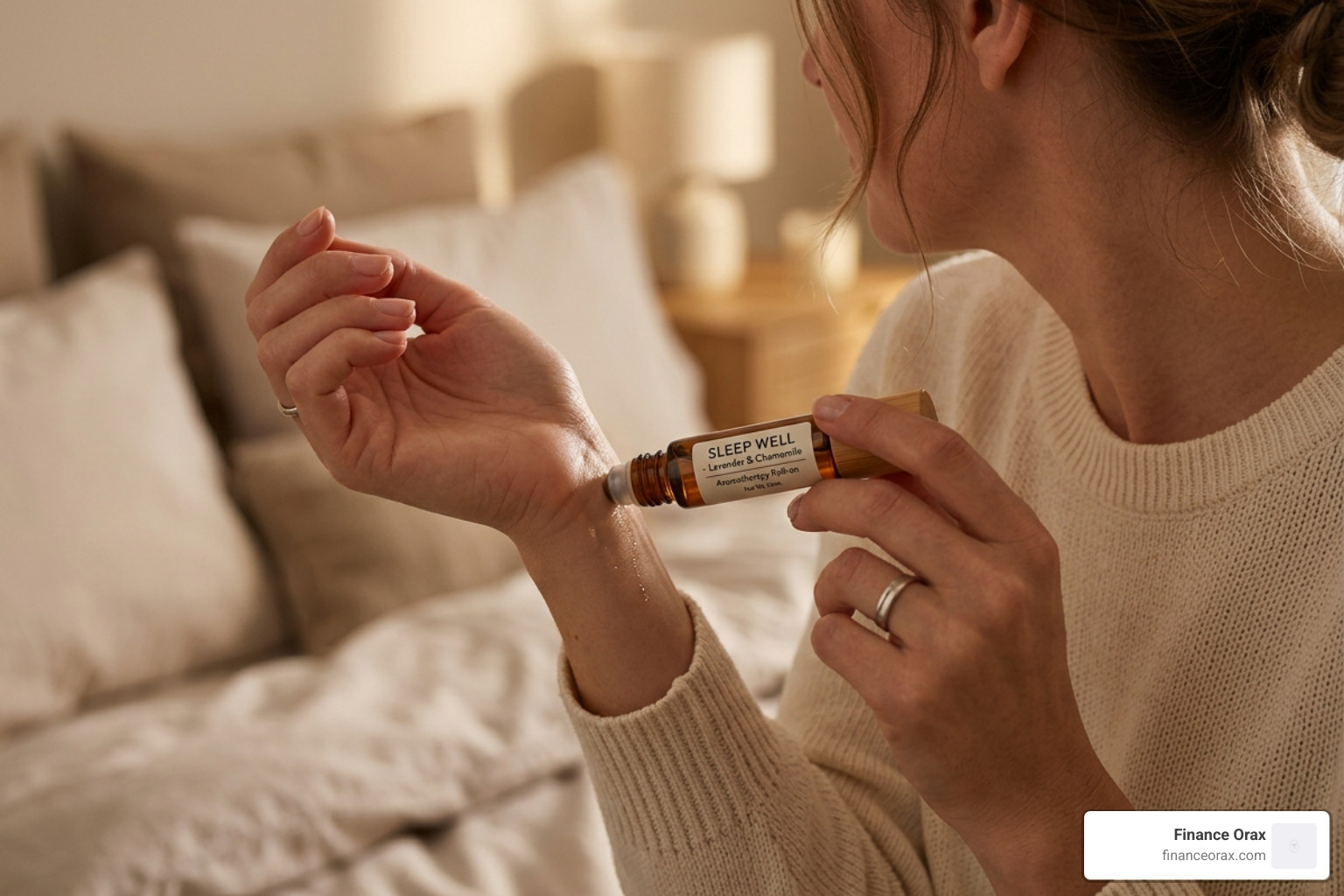
How you get the oils into your environment matters as much as which oils you choose. At Finance Orax, we believe that the best method is the one that fits seamlessly into your existing decor and lifestyle.
- Ultrasonic Diffusers: These are the most popular choice for a reason. They use water and ultrasonic vibrations to create a cool mist, preserving the integrity of the oil. They also add a touch of humidity to the air, which can be great for sleep.
- Pillow Mists and Linen Sprays: This is the “lazy” (and we mean that in the best way) way to do aromatherapy. A quick spritz on your sheets provides an immediate scent cue. As suggested in this guide on Aromatherapy for Sleep | Best Essential Oils and Bedtime Rituals | Oils4life, mists are perfect for those who don’t want to deal with cleaning a diffuser every day.
- Topical Application (Roll-ons): Applying oils to pulse points like wrists, temples, or the back of the neck allows the aroma to be released by your body heat. It also allows for a small amount of the oil to be absorbed through the skin.
- Inhalation: If you’re in a hurry, simply warming a drop of oil between your palms and taking three deep, slow breaths can trigger the relaxation response.
Timing Your Aromatherapy Bedtime Wind Down
One of the biggest mistakes people make is turning on their diffuser as they are climbing into bed. By then, your brain is already frustrated that it isn’t asleep yet!
The “pre-sleep window” is crucial. You should start your aromatherapy bedtime wind down about 30 to 60 minutes before you intend to turn out the lights. This allows the aroma to permeate the room and begins the physiological process of lowering your heart rate.
Aim for a 20-30 minute session. Why not all night? Two reasons: olfactory fatigue and safety. Your brain eventually stops “noticing” the scent if it’s constant (fatigue), and for most people, 30 minutes is more than enough to trigger the necessary GABAergic response. Consistency is the secret sauce—doing this at the same time every night builds a powerful brain association between that specific scent and the act of powering down.
Safety Guidelines and Common Mistakes
Essential oils are incredibly concentrated plant extracts. One drop of peppermint oil is equivalent to about 28 cups of peppermint tea! Because they are so potent, safety is paramount.
- Dilution is Non-Negotiable: Never apply pure essential oils directly to your skin. You must use a carrier oil. Popular choices include Sweet Almond Oil (affordable and gentle) or Jojoba Oil (great for skin and doesn’t stain sheets). A standard adult dilution is 1-2%, which is roughly 6 to 12 drops of essential oil per 30ml of carrier oil.
- Patch Testing: Before you slather a new blend all over your arms, do a patch test on your inner forearm. Wait 24 hours to ensure you don’t have a reaction.
- Photosensitivity: Some oils, especially citrus ones like lemon or orange (though less so with bergamot FCF), can make your skin sensitive to sunlight. Stick to using these at night!
- Over-Diffusion: More is not always better. Using too much oil can lead to headaches or even nausea. Stick to 3–5 drops in a standard bedroom diffuser.
For more on building a safe routine, check out this Nighttime Aromatherapy Routine: Wind Down for Quality Sleep – Aromatherapy Naturals.
Creating a Holistic Aromatherapy Bedtime Wind Down Ritual
Aromatherapy works best when it’s part of a larger, holistic environment. Think of your bedroom as a sanctuary. Here is how to integrate scent into a total room setup:
- Optimize the Environment: Ensure your bedroom is cool, dark, and quiet. Use breathable bedding—natural fibers like cotton or linen allow for better temperature regulation.
- Support Your Body: A supportive mattress and even an adjustable bed can enhance the aromatherapy experience. Elevating your head slightly can actually help open up your airways, making it easier to breathe in those calming scents.
- The “Digital Sunset”: Dim the lights and put away screens 60 minutes before bed. Replace scrolling with a warm foot bath—add two drops of lavender diluted in a tablespoon of oil to the water for a grounding experience.
- Mindful Breathing: As you smell your chosen blend, practice the 4-2-6 breath: inhale for 4 seconds, hold for 2, and exhale for 6. This further signals to your nervous system that it’s time to shut down.
- Safety for Others: If you have pets, especially cats, be cautious. Many oils are toxic to them. Always ensure the room is well-ventilated and that the pet can leave the room if the scent bothers them. For children, stick to “child-safe” oils like lavender and mandarin at much lower dilutions (0.25%).
Frequently Asked Questions about Sleep Aromatherapy
Can essential oils replace prescription sleep aids?
Aromatherapy should be viewed as a complementary tool, not a medical replacement. If you suffer from chronic insomnia or a clinical sleep disorder, it is vital to consult with a healthcare provider. However, for many, aromatherapy can reduce the need for aids by addressing the stress and anxiety that cause sleep issues in the first place.
How do I safely use essential oils on my pillows?
The best way is to create a water-based mist. Mix 10 drops of oil with a teaspoon of high-proof alcohol (to help it disperse) and 2 ounces of distilled water in a spray bottle. Shake well before each use. This prevents the concentrated oil from staining your fabric or irritating your facial skin.
Which oils should be avoided before bed?
Stay away from “picker-uppers.” Peppermint, Eucalyptus, Lemon, and Rosemary are fantastic for focus and energy in the morning, but they can be too stimulating for a aromatherapy bedtime wind down. They increase mental alertness—exactly what we’re trying to avoid!
Conclusion
At Finance Orax, we believe that a better life starts with better routines. Transforming your bedroom into a sensory sanctuary doesn’t just happen; it’s a choice you make to prioritize your well-being. By incorporating a consistent aromatherapy bedtime wind down, you’re not just “smelling scents”—you’re training your brain to embrace restorative rest.
Pair your new favorite blends with a supportive mattress, dim lighting, and a screen-free hour, and you’ll find that “Dreamland” isn’t as far away as it used to feel.
Ready to transform your home into a haven of rest? Start your journey toward deeper, more restorative sleep today by exploring our tips on home environment optimization and holistic routine-building. Sweet dreams!
