
Lighting Made Better: Why Your Desk Needs an LED Upgrade
Understanding Energy Efficient Lighting for Your Workspace
When we talk about building a better daily routine at Finance Orax, we often focus on the big things: the desk, the chair, the schedule. But the light hitting your keyboard at 4:00 PM on a Tuesday is just as vital. Energy efficient lighting isn’t just a buzzword for environmentalists; it’s a fundamental technology that changes how we inhabit our workspaces.
Currently, in April 2026, lighting accounts for roughly 15% of an average home’s electricity use. In commercial buildings, that number jumps to 17%, and in some older office structures, it can represent more than 30% of the total electrical energy consumed. By choosing efficient options, we aren’t just saving pennies; we are fundamentally shifting how our homes and offices consume resources.

The shift toward efficiency was accelerated by the fact that traditional incandescent bulbs are no longer manufactured in the United States. This transition has led us to a world of “solid-state lighting.” Unlike old bulbs that rely on a fragile filament, modern efficient bulbs use semiconductors to turn electricity into light. This process is vastly more direct, which is why according to the Consumer Guide to Energy-Efficient Lighting, making the switch is one of the most cost-effective ways to modernize any building.
The Science of Energy Efficient Lighting
To understand why your desk needs an upgrade, we have to look at how these bulbs actually work. Traditional bulbs work through incandescence—heating a wire until it glows. It’s a 19th-century solution to a 21st-century need.
Modern energy efficient lighting, specifically LEDs (Light Emitting Diodes), uses a process called electroluminescence. When an electrical current moves through a semiconductor, it emits photons. Because this doesn’t require extreme heat to produce light, the “thermal management” is much easier.
We also need to rethink how we measure light. For decades, we bought bulbs based on wattage, which is actually a measure of power consumption, not brightness. In efficiency, we look at lumens.
- An old 60W incandescent produces about 800 lumens.
- A modern LED produces that same 800 lumens using only about 6 to 9 watts.
By focusing on lumens per watt, we can ensure our workspaces are brilliantly lit without the massive power draw.
Comparing the Contenders: LED vs. CFL vs. Incandescent
If you’ve ever stood in a hardware store aisle feeling overwhelmed by the “lighting wall,” you aren’t alone. However, when we break down the data, the “best” choice for your desk becomes very clear.
| Feature | LED (Light Emitting Diode) | CFL (Compact Fluorescent) | Incandescent |
|---|---|---|---|
| Lifespan | 25,000+ hours | 8,000–10,000 hours | 750–1,000 hours |
| Efficiency | ~90% efficient | ~85% efficient | ~10% efficient |
| Energy Waste | Low (Minimal heat) | Medium (80% heat) | High (90% heat) |
| Mercury Content | None | Contains Mercury | None |
| Startup Time | Instant-on | Can take 30s to warm up | Instant-on |
As you can see, the incandescent bulb is the clear loser. It’s a “heat ball” that happens to give off a little light. CFLs were a great stepping stone in the early 2000s, but they have significant downsides: they contain mercury (which requires special disposal) and they often take a few seconds to reach full brightness—which is annoying when you’re trying to jump into a Zoom call.
Why LEDs are the Most Energy Efficient Lighting Choice
LEDs have won the lighting war for several reasons. First, they are incredibly durable. Because they are solid-state devices, they don’t have glass shells or filaments that break if you bump your desk lamp.
Second, LEDs offer “directional light.” Traditional bulbs emit light in 360 degrees, meaning much of that light is lost inside the lamp fixture or reflected poorly. LEDs emit light in a specific direction, making them perfect for task lighting, recessed downlights, and under-cabinet fixtures. According to the LED Lighting Benefits guide, this directionality alone makes them significantly more efficient for focused work.
Finally, the longevity is staggering. If you leave an LED on 24/7, it would last about 15 years. For a standard workday, you might not need to change your desk bulb for 25 years. That’s a lot of “routine” maintained without a trip to the store.
The Financial and Environmental ROI of Upgrading
At Finance Orax, we love a good return on investment (ROI). Upgrading your lighting is one of the few home improvements that pays for itself almost immediately.
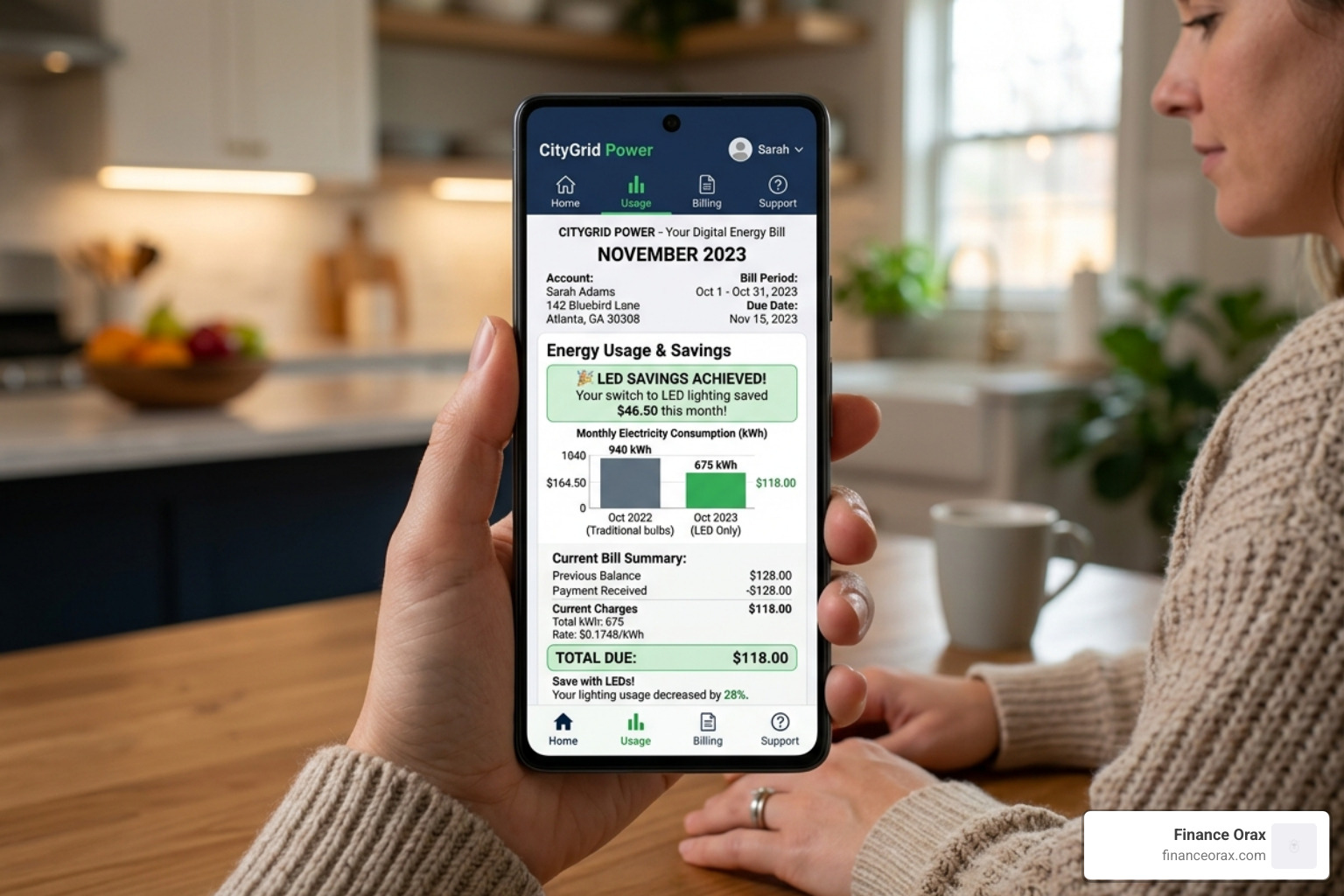
Let’s look at the numbers:
- Annual Savings: The average household saves about $225 per year by switching to LED lighting.
- Single Bulb Impact: Replacing just one traditional bulb with an LED can save you $81.68 over the life of that bulb.
- National Impact: If everyone made the switch, the U.S. could save 569 TWh annually by 2035—that’s the equivalent output of 92 large power plants.
There is also a hidden financial benefit: Reduced HVAC load. Because incandescent bulbs release 90% of their energy as heat, they actually fight against your air conditioning in the summer. In commercial settings or data centers, switching to LEDs can significantly lower cooling costs because the building isn’t being heated from the inside by thousands of “mini-heaters.”
Maximizing Savings with ENERGY STAR and Rebates
To ensure you’re getting the best ROI, always look for the ENERGY STAR label. This isn’t just a marketing sticker; it’s a certification from the EPA. ENERGY STAR bulbs must pass rigorous testing to ensure they meet high-quality standards for brightness, color rendering, and energy use.
Furthermore, many utility companies offer rebates to offset the upfront cost of upgrading. In some commercial cases, rebates can be as high as $249 per fixture. Even for homeowners, many local programs offer “instant rebates” at the register in hardware stores, making the price of a high-quality LED almost identical to a low-quality alternative.
How to Implement Your New Setup and Maintenance
Ready to upgrade? Don’t just grab the first white box you see. To build a workspace that supports your routine, you need to understand light quality.

When shopping, look at the Lighting Facts Label on the back of the box. You’ll want to pay attention to:
- Correlated Color Temperature (CCT): Measured in Kelvins (K).
- 2700K – 3000K (Warm White): Best for bedrooms or cozy living spaces.
- 3500K – 4100K (Cool White): Great for kitchens and general workspaces.
- 5000K – 6500K (Daylight): Best for high-focus task lighting or areas where you need to see fine detail.
- Color Rendering Index (CRI): This measures how “true” colors look under the light. For a workspace, look for a CRI of 80 or higher (100 is equivalent to natural daylight).
- Dimming Compatibility: If your desk lamp has a dimmer, ensure the LED bulb specifically says “Dimmable.” Not all LEDs are compatible with traditional dimming switches.
Proper Disposal: While LEDs don’t contain mercury, they do contain electronic components. When they finally do kick the bucket (in about two decades!), don’t just toss them in the trash. Many hardware stores like Home Depot or Lowe’s offer recycling bins for bulbs. For CFLs, recycling is mandatory in many areas due to the mercury content.
Integrating Energy Efficient Lighting into Your Eco Desk Setup
A truly efficient workspace uses a “layered” approach. We recommend combining your new LEDs with other smart strategies:
- Task Lighting: Instead of lighting the whole room, use a high-efficiency LED desk lamp to focus light exactly where you’re working.
- Ambient Layers: Use softer, dimmable LEDs for the rest of the room to reduce eye strain.
- Smart Controls: Motion sensors and timers ensure that lights aren’t left on when you step away for lunch. Smart bulbs can even be programmed to change color temperature throughout the day—mimicking the sun to help your circadian rhythm.
- Daylighting: The most energy efficient lighting is the sun! Position your desk near a window to take advantage of natural light, and use your LEDs only when the clouds roll in or the sun goes down.
For more tips on how to optimize your environment, check out More info about workspace optimization.
Common Questions About Modern Workspace Illumination
How do I know if a light bulb is energy efficient?
The easiest way is to look for the ENERGY STAR logo on the packaging. Additionally, check the efficiency percentages: LEDs are generally 90% efficient, while CFLs are about 85%. If the bulb lists a very low wattage (like 8W) but claims to replace a 60W bulb, it’s an energy-efficient model.
Which light bulb is the most energy efficient for a desk?
The LED bulb is the gold standard for desk setups. It provides the best “lumens per watt” (typically 40-80 lumens/watt), generates almost no heat (keeping your workspace comfortable), and offers the best directional light for reading and typing.
How can I recycle energy efficient light bulbs properly?
For LEDs and CFLs, check your local city website for community recycling programs. Most major hardware retailers provide free drop-off kiosks for bulbs. Because CFLs contain small amounts of mercury, they should never be broken or thrown in the regular trash.
Conclusion
At Finance Orax, we believe that your environment dictates your output. By making the switch to energy efficient lighting, you aren’t just saving $225 a year or helping the planet—you’re creating a more stable, comfortable, and modern routine.
Whether you’re choosing a vintage-style “Edison” LED for your aesthetic or a high-powered daylight bulb for your drafting table, the technology is now cheaper and better than ever before. It’s a low-cost upgrade with a high-impact result.
Ready to transform your workspace? Upgrade your desk setup today and see how the right light can make all the difference.
